

When I was a kid, my dad would start me on a project and then walk away. When I thought I was finished, I’d go get him to inspect my work. Whether it was scraping a gasket off a manifold or weed-whacking around the garage, he’d usually take a look, pause for a second, and say, “Well… that’s a good start.”
It wasn’t criticism. It was perspective. The job technically worked, but it wasn’t done yet.
That same phrase applies to most video telematics and fleet telematics systems in use today. Forward-facing cameras help document what happened. Rear-facing cameras add another layer of protection when incidents occur. Fleets can review footage, resolve claims, and establish fault when it matters most. That capability alone has saved companies millions of dollars and countless hours tied up in disputes, and it’s become a baseline expectation across the industry.
It is progress. It is valuable. And it is, very clearly, a good start.
Where Standard Video Telematics Falls Short
Where many fleets begin to feel the limits of standard setups isn’t in having video, it’s in having enough context. When an incident turns into a claim or a legal conversation, unanswered questions slow everything down. What was happening along the side of the vehicle? What was the driver reacting to? Was there another vehicle involved that never entered the forward camera’s field of view?
Those gaps are often what drag incidents out longer than they need to. Expanding camera coverage doesn’t change the purpose of telematics, it strengthens it. More angles mean fewer assumptions, faster conclusions, and clearer evidence across the entire fleet camera system. Sometimes that evidence confirms the driver did everything right. Other times it highlights a coaching opportunity. Either way, fleets get answers sooner and can move forward instead of staying stuck in limbo.
Seeing the Whole Picture Changes Everything
Anyone who grew up in the late ’80s or early ’90s probably remembers getting the NES Nintendo Entertainment System. Out of the box, it worked. One controller. One game. Enough to turn it on and start playing. But if you really wanted to experience what it could do, you needed more. A second controller. And The Legend of Zelda.
Video telematics works much the same way. A forward-facing and rear-facing camera setup gives fleets enough to function. Enough to document incidents. Enough to meet minimum expectations. Expanding coverage with additional cameras doesn’t change what the system is meant to do, it simply lets it do the job more completely. Instead of piecing together what might have happened, fleets can see what actually happened from multiple perspectives using cameras for fleet operations.
That’s why many fleets see expanding their field of view as the smartest next investment they can make. Adding two or three additional cameras fills in blind spots that forward-only systems can’t capture, improves incident documentation, and provides better material for training drivers using real-world situations rather than assumptions.
A Practical Way to Expand Coverage
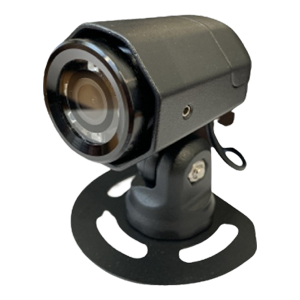
For fleets looking to expand coverage, the 3700 Convoy Cam has become a common choice. Its compact, aerodynamic design allows it to be mounted in nearly any configuration, while the internally rotatable lens simplifies installation across different vehicle types. In tighter or more specialized applications, the camera can be removed from its housing and used as a flush-mount solution, adding visibility where traditional cameras simply won’t fit.
The camera is built for harsh environments, with an IP69 rating, full weather testing, and night vision capability. The goal isn’t just to capture more footage, but to capture the right footage so incidents can be reviewed quickly, resolved accurately, and used to improve performance across the fleet.
By combining two camera feeds into a single video channel, fleets can expand coverage while keeping channel counts under control. It is a practical way to strengthen safe fleet cameras strategies without adding complexity to the system or the budget.
Finishing the Job
Most fleets today have already taken an important first step. They’ve made a good start protecting their drivers and their business with video telematics.
My dad didn’t just point out what could be better, he took the time to show me how to finish the job and trusted me to do it right the next time. That’s the role we aim to play across the industry.
Whether a fleet is expanding telematics coverage to close claims faster, add clarity to incidents, or train drivers more effectively, the goal is the same: fewer unknowns, clearer answers, and better outcomes.
A good start matters. But finishing the job matters more. Contact us today to learn more about our camera solutions.